Do I need an eye exam?
Eye exams play a huge part in making sure your eyes stay healthy. Not only are they important for indicating whether you need to start wearing glasses or need to change your prescription, but also for helping to detect eye conditions that can affect your vision.

What is OCT?
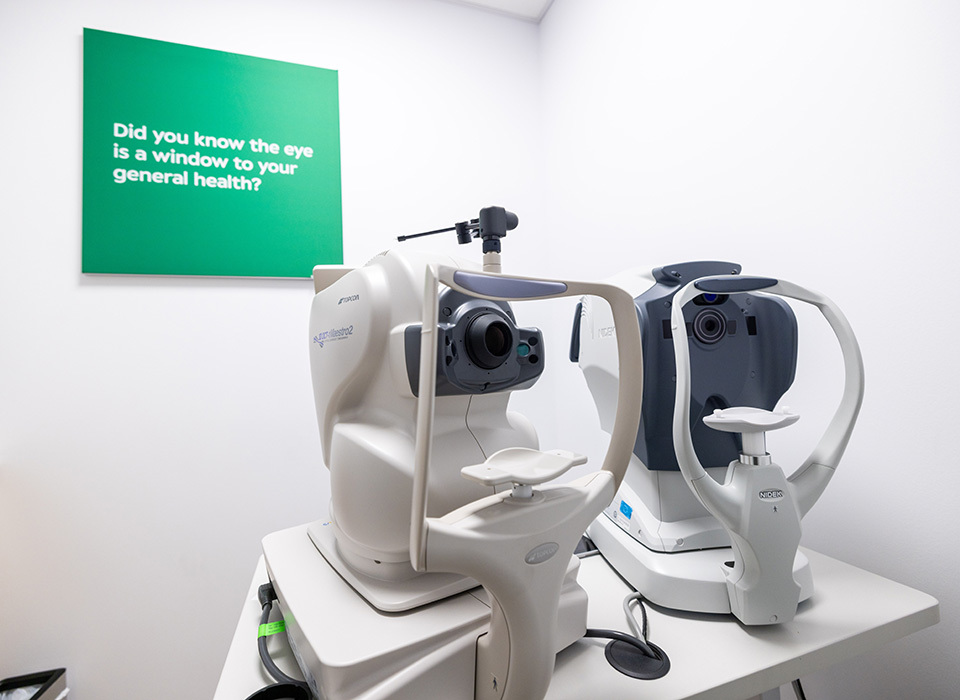
OCT stands for optical coherence tomography – it’s an advanced piece of technology that helps your optometrist to see the health of your eyes in even greater detail.
It works by taking a series of pictures to create a 3D scan of the back of your eye, showing all the layers that make up the retina. Your optometrist can then examine these deeper layers to help them spot any signs of eye and health conditions like diabetes, glaucoma, and age-related macular degeneration in their earliest possible stages.
At Specsavers, we believe OCT scans are so important, they're included with every standard eye exam.
How often do I need an eye exam?
Your optometrist will typically recommend that you book an eye exam at least every two years. However, if you notice any changes to your vision, fall into certain age groups, or have started experiencing some of the symptoms we’ve outlined below, it’s best to book an eye exam as soon as possible.
Over 40s
Changes to your vision are a natural part of the aging process and commonly occur after the age of 40. There are also certain risk factors that may require more frequent eye exams, irrespective of your age. These include a family history of glaucoma and a diagnosis of diabetes.
It's recommended that adults aged 40 to 64 have a comprehensive eye exam every two years, or more frequently depending on their individual risk factors and overall eye health. During this stage of life, changes like presbyopia (a natural, age-related eye condition where the eye’s lens loses flexibility), commonly develop, making it harder to focus on near tasks, while conditions like glaucoma and diabetic retinopathy may begin without noticeable symptoms. Regular eye exams support early detection and timely management of these changes, helping to maintain clear, comfortable vision. Keeping up to date with your eye exams also provides peace of mind that your eye health is being monitored thoroughly.
Over 65s
For adults aged 65 and over, it’s recommended to have eye exams every year. As we age, conditions like age-related macular degeneration, glaucoma and cataracts become more common. Many of these conditions develop gradually and may not cause noticeable symptoms at first. But with early diagnosis, most age-related conditions can be managed effectively. This is why regular eye exams at this age are so important to catch any conditions as early as possible, so you have peace of mind that everything’s on track.
Teens
Teenage years can be a prime time for the development of near-sightedness (myopia) and eye strain, so we’d recommend that teens come in for regular eye exams. Uncorrected vision problems can affect all aspects of their lives – from their studies at school or university, their job and even their social life and ability to participate in sports or activities.
Luckily, there are all kinds of options to help them see comfortably, like wearing glasses, prescription sunglasses and contact lenses.
Children
Vision has a very important role in your child's development, so it’s important to stay on top of their eye health. We know how tricky it can be to work out whether your child is seeing clearly and comfortably, but regular trips to the optometrist will help to make sure that their vision and eye health are in the best condition possible.
For this reason, annual eye exams are recommended for both children and teens.
Toddlers
Your optometrist might recommend that your child should come in for their first eye exam between the ages of 6-9 months. It is then recommended that they should undergo at least one eye examination between the ages of 2 and 5 years old.
Learning and developmental challenges can sometimes be caused by uncorrected vision problems, so the earlier they can be detected, the better the chance of correcting them.
Pregnancy
Your body goes through a lot of changes during pregnancy, and your eyes can be affected too. Fluctuations in hormone levels can lead to dry eyes, blurred or distorted vision. Some of these symptoms can be common and are just temporary, natural changes, but if you do experience any of these symptoms it’s best to visit your optometrist just to be sure.
If you experience sudden spots or floaters in your vision during pregnancy, this should be checked out as soon as possible as this could indicate a more serious condition.
Eye exams are provided by independent optometrists.
Noticed a change in your eyesight?
If you have any concerns about your eye health, contact or visit your local optometrist immediately – even if you do not have an appointment.